
Hardwood & Timber Decking
Australian hardwood decks in spotted gum, blackbutt and merbau, chosen to suit the site, including bushfire-prone land where the BAL rating affects which timbers can be used.
Learn More →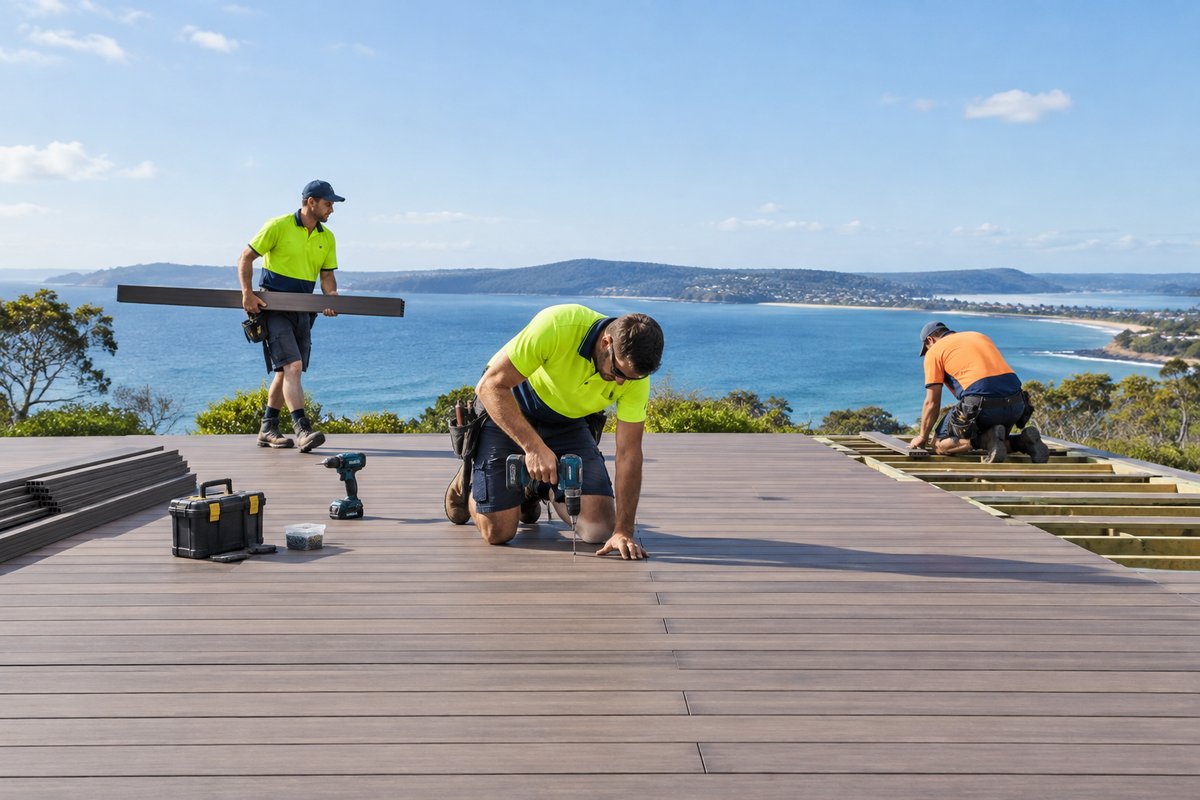
Low-maintenance composite decks that stand up to salt air, strong sun and termites, with hidden fixings, matching fascia boards and stairs.
Request a Quote
Composite decking suits owners who want the look of a timber deck without sanding and oiling every year. We build with capped composite boards, which have a hard polymer shell over a wood-fibre and plastic core. That shell resists staining, fading and moisture far better than older uncapped boards. We lay boards over a properly engineered subframe. That can be galvanised steel or treated pine with joist protection tape, depending on the site. We fix them with concealed clip systems, so you get a clean surface with no screw heads to catch bare feet.
Conditions on the Central Coast are hard on any outdoor surface. Beachside homes from the coastal suburbs to the lake foreshores cop salt-laden wind, while homes further inland deal with strong summer heat and humid, still evenings. Composite boards expand and contract with temperature, so we set end and side gaps to the manufacturer's specification and leave room for airflow under the deck. Without that airflow, trapped moisture breeds mould on the frame. In salt-exposed spots we use stainless or hot-dip galvanised fixings and brackets. On homes in bushfire-prone areas, we check the board and the build method against your site's BAL rating before you choose a colour.
Most of our composite projects are part of a bigger plan. A family might want a deck off the living room that steps down to the lawn. Someone else might want a deck on a steep sandstone block that needs posts, bearers and stairs engineered from scratch, which is where our elevated and multi-level deck work comes in. Many clients also add a roof or pergola, turning the deck into one of our covered decks that can be used through summer storms and winter. We design and manage the whole job, including the balustrades, lighting and landscaping around it.
What happens on site at each stage of your composite deck build
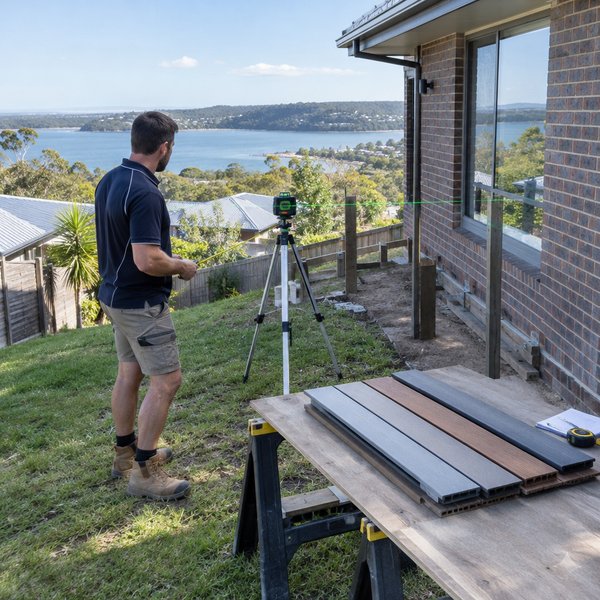
We visit your home to measure the area and check the fall of the land, the soil and how the deck will meet your doors and floor levels. We then draw up a layout showing board direction, borders, stairs and balustrades. You'll see board samples in natural light on your own site, because colours often look different outdoors than in a showroom.
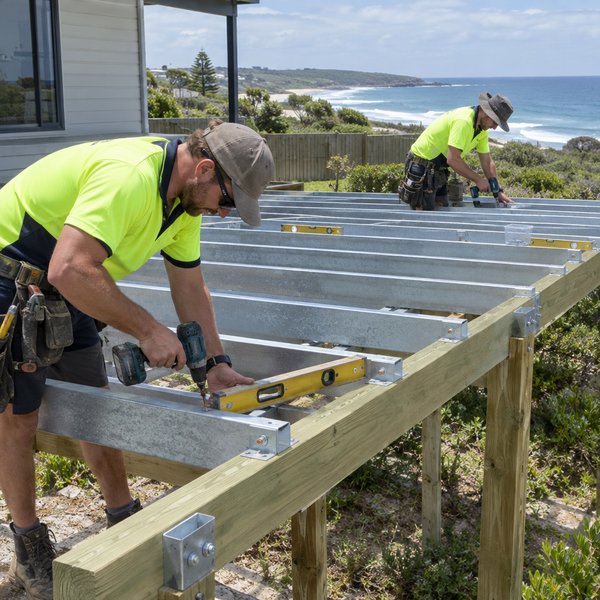
We dig and pour footings, then set posts, bearers and joists at the spacing the board manufacturer requires. Composite boards span less than hardwood, so joist spacing is often closer than on a timber deck. On timber frames we apply joist tape to the tops of the joists to shed water and protect the frame long-term.
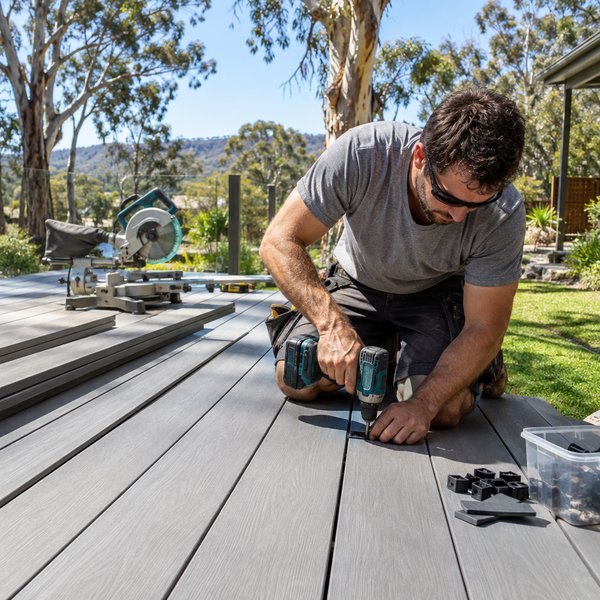
We fit the starter clips, then lay each board with hidden clips that hold it down and set the side gap automatically. We cut ends square and leave expansion gaps sized for the temperature on the day of installation. Picture-frame borders and breaker boards go in at this stage for a finished edge.
We build the stairs, fit fascia boards to hide the frame, and install balustrades to the height and spacing required for your deck. We then clean the deck surface and walk you through it. You'll learn how to care for your boards and what to avoid, such as dragging metal furniture or using rubber-backed mats.
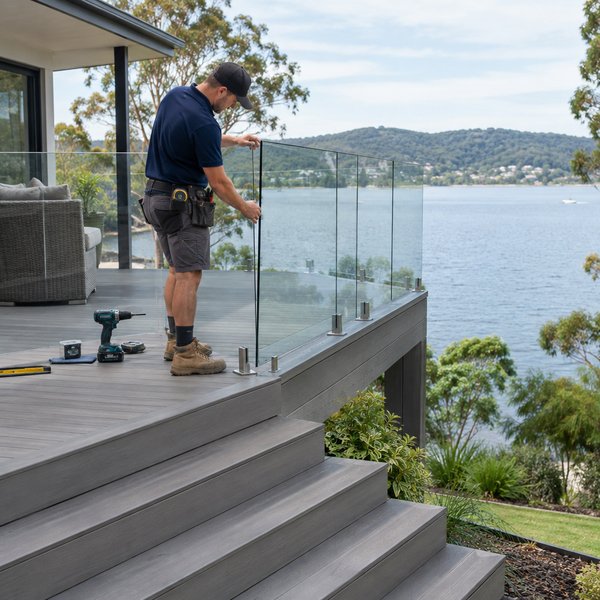
Low-maintenance decking built to handle coastal weather
Capped composite boards don't need sanding, staining or oiling to stay looking good. A wash with warm soapy water and a soft broom handles most dirt, leaf litter and barbecue spills. You can spend summer weekends using the deck instead of maintaining it.
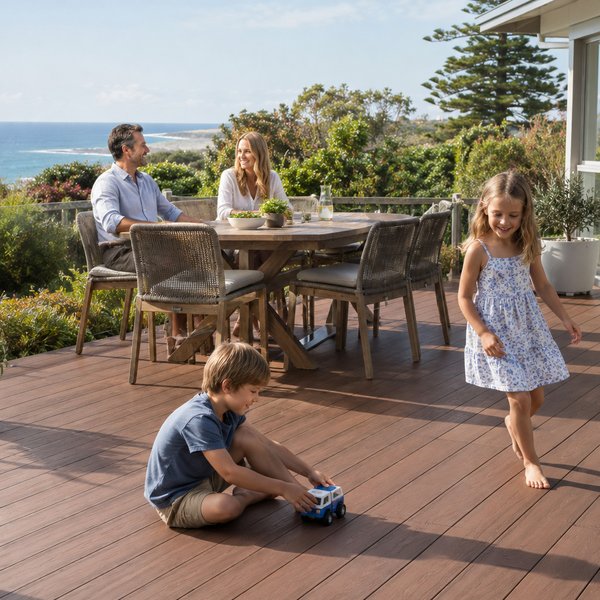
The capped surface helps the boards resist the moisture, mould and salt spray that grey and split timber on exposed coastal decks. Combined with corrosion-resistant fixings and a ventilated subframe, the deck is built to cope with sea breezes and humid summers. Splinters and cupped boards stop being a yearly problem.
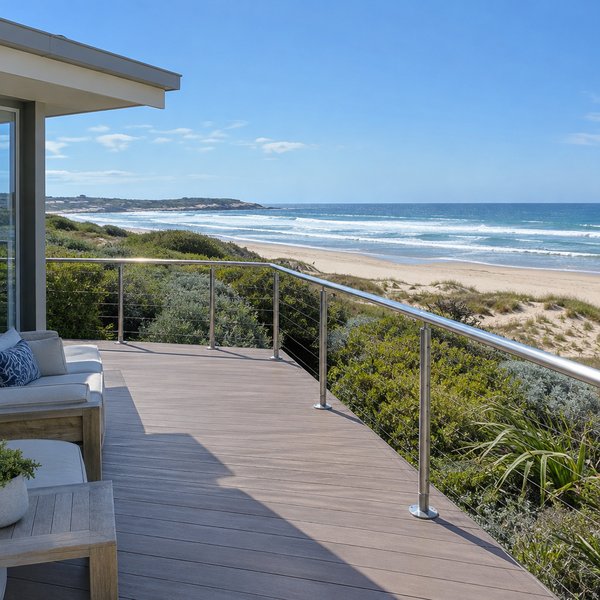
Composite boards come in even colours and grain patterns, so your deck looks consistent from end to end. Hidden fixings and matching fascia boards give the deck a crisp, finished edge that suits modern new builds and renovated homes. It reads as part of the house, not an add-on.
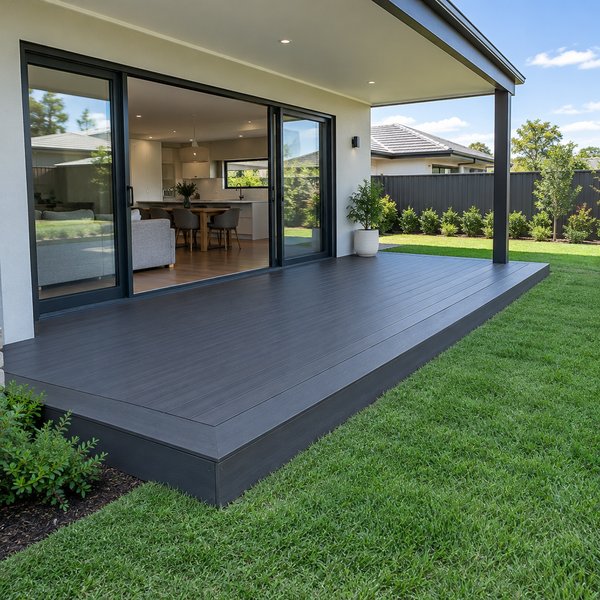
We plan the deck alongside the roof, pergola, outdoor kitchen and landscaping, so it all works together. One team manages the full project from design to handover. You won't be coordinating several trades yourself.
Composite boards have different joist spacing, gapping and ventilation needs than timber. We build every frame to the board manufacturer's installation requirements. Getting this right is what stops boards sagging, buckling or voiding their product warranty.
We build on beachside lots, lakefront homes and steep sandstone blocks across the Central Coast. We know which fixings stand up to salt air and how to engineer footings on difficult ground. That local knowledge shapes every design we draw.
We build in both composite and Australian hardwoods like spotted gum, blackbutt and merbau. That means we can give you a straight comparison for your site and budget. Some clients even combine the two, with hardwood stairs or screens beside a composite deck.
Common questions answered
Composite boards can get hot in direct sun, and darker colours hold more heat than lighter ones. If your deck faces north or west with no shade, we usually suggest a lighter colour or a roof or pergola over part of it. We'll talk through the deck's orientation with you before you choose a board.
Composite boards usually cost more to buy than common hardwoods, but you save on sanding and oiling over the life of the deck. The total price depends on deck size, height off the ground, the frame material, stairs, balustrades and how complex the design is. We give you an itemised quote after we've measured your site.
Yes, capped composite handles salt air well. The weak point on coastal decks is usually the fixings and the frame, not the boards. We use stainless or hot-dip galvanised hardware and allow good airflow under the deck to limit corrosion and moisture build-up.
Sometimes, but only if the frame is sound and the joist spacing suits the composite boards you choose. Many older frames have joists spaced too far apart or show rot at the bearers and posts. We inspect the frame first, and if it isn't up to standard we'll recommend a full rebuild through our deck replacement service.
Sweep it regularly and wash it a few times a year with warm soapy water and a soft brush, more often if you're near the beach or under trees. Clean up grease and oil spills quickly, and keep gaps between boards clear of leaves so water drains. Avoid high-pressure washers held close to the surface, as they can mark the cap layer.
We provide Composite Decking throughout the Central Coast, NSW and surrounding suburbs.
Don't see your area? Contact us to check if we service your location!
View All Areas